The Ultimate Guide to Brain Training for Your Dog
If you’ve ever been frustrated by a dog that won’t listen, pulls on the leash, or destroys things when left alone, you’re not dealing with a “bad dog.” You’re dealing with a bored, under-stimulated dog. And the solution isn’t more exercise — it’s smarter exercise for their brain.
This is the guide I wish I had when I first started training. It covers the principles behind brain training, the best at-home games you can start today, and the program that completely changed how I approach dog training.
Why Brain Training Works Better Than Physical Exercise Alone
Dogs were bred to work — herding, hunting, tracking, guarding. Modern pet dogs have all that drive and intelligence with nowhere to direct it. The result is destructive behavior, anxiety, and constant attention-seeking. A 15-minute brain training session can tire a dog out more than a 45-minute walk, because it engages their problem-solving instincts.
The science backs this up. Mental stimulation triggers the release of dopamine in dogs, the same reward chemical that makes humans feel satisfied after completing a challenging task. A dog that gets regular mental stimulation is calmer, more focused, and significantly easier to train.
5 Brain Training Games You Can Start Today
1. The Muffin Tin Game
Place treats in some of the cups of a muffin tin, then cover all the cups with tennis balls. Your dog has to figure out which balls are hiding treats. Start with all cups filled, then gradually reduce the number of treats to increase difficulty.
For food-driven dogs, the treat quality matters because you will use tiny rewards often. Keep the pieces small, rotate proteins if your dog tolerates them, and avoid turning training into a junk-food routine. If you want natural treats or chews to cut into high-value rewards, Check Raw Paws selection before your next training session.
2. The Shell Game
Place a treat under one of three cups. Shuffle them slowly, then let your dog sniff out which cup hides the treat. This builds focus and nose work skills simultaneously.
3. Snuffle Mat Feeding
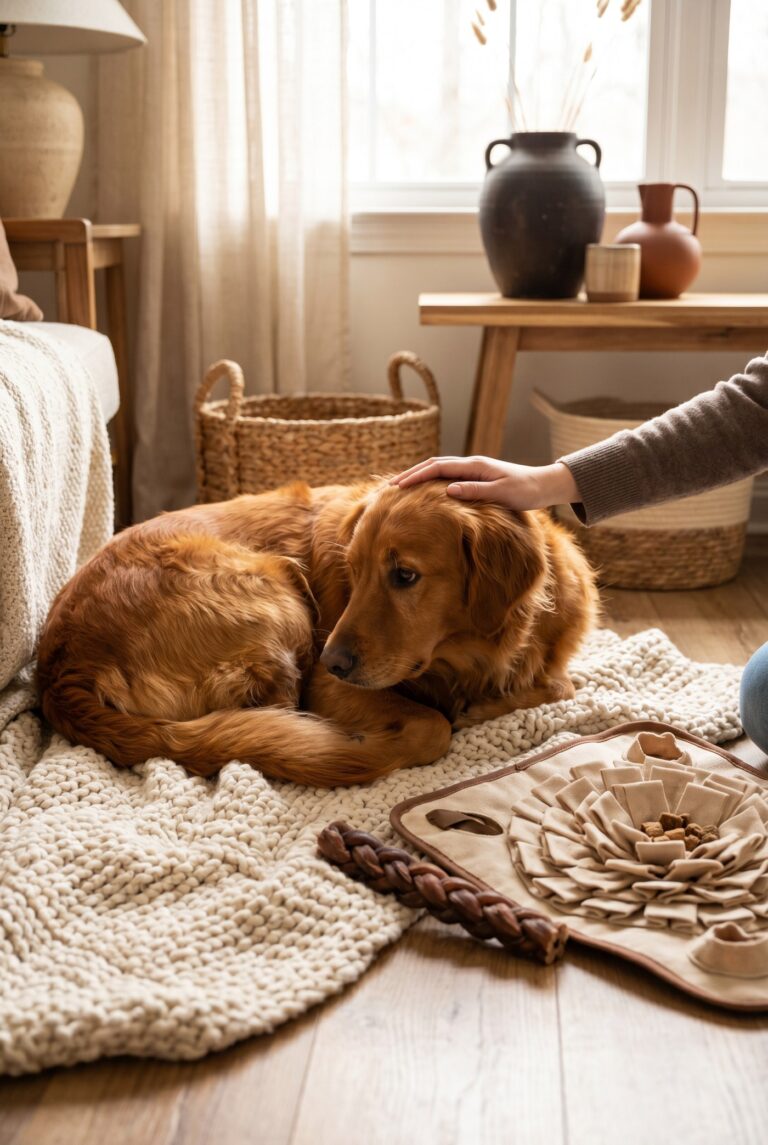
Replace your dog’s food bowl with a snuffle mat. Scatter their kibble through the mat’s fabric folds and let them forage for every piece. This turns a 30-second meal into a 10-minute mental workout.
4. The “Which Hand?” Game
Hide a treat in one fist, hold both fists out, and let your dog sniff and paw to indicate which hand holds the treat. When they get it right, open that hand and let them have it. This builds impulse control and focus.
5. Name That Toy
Teach your dog the names of their toys one at a time. Start with one toy, say its name, and reward them for picking it up. Once they know one toy’s name, add a second. This game can keep dogs mentally engaged for months as you build their vocabulary.
The Program That Takes It to the Next Level
If you want a structured, step-by-step system that goes far beyond these basics, I highly recommend Brain Training for Dogs by certified professional dog trainer Adrienne Farricelli.
This program is built around the concept of “neuroplasticity” — the idea that dogs can literally rewire their brains through learning. The program takes you through a series of progressively challenging games and exercises that build your dog’s focus, impulse control, and problem-solving ability.
What makes it different from other training programs is the emphasis on building a genuine partnership with your dog. Instead of commanding and correcting, you’re collaborating and rewarding. The result is a dog that actually wants to listen to you.
The program includes video demonstrations, a private members’ forum, and lifetime access. It covers everything from basic obedience to advanced tricks, all through the lens of mental enrichment. Learn more about Brain Training for Dogs here.
Essential Brain Training Tools
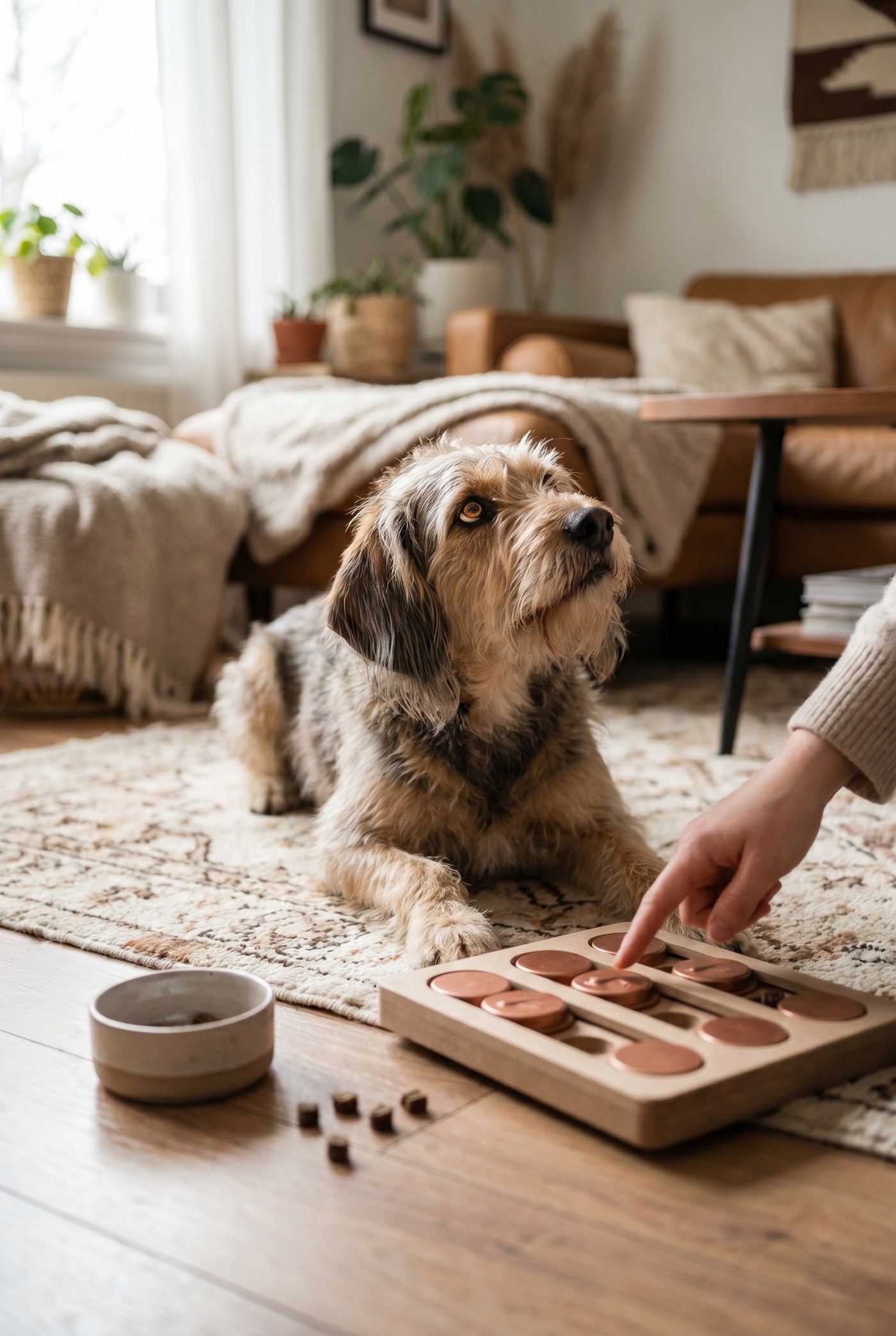
- We recommend the Outward Hound by Nina Ottosson Dog Smart Treat Puzzle Enrichment Toy as the starter puzzle because it teaches basic problem-solving without overwhelming a new learner.
- The KONG Classic Stuffable Dog Toy is the everyday pick for turning food into a longer training reward.
- For a tougher food puzzle, the WEST PAW Zogoflex Toppl Interactive Treat Dispensing Puzzle Dog Toy is the upgrade because it is durable and easy to clean.
- The PetSafe Busy Buddy Twist'n Treat Interactive Treat Dispenser is the adjustable option when you want to control how difficult the reward release should be.
- If your dog is best suited to a medium size, choose the KONG Classic Stuffable Dog Toy, Medium instead of guessing on sizing.
Quick Pick Summary
If you’re still stuck, here are our top 3 picks:
- For the Structured Training Plan: Brain Training for Dogs. It gives owners a complete game-based system instead of random one-off tricks.
- For the First Puzzle Toy: Outward Hound by Nina Ottosson Dog Smart Treat Puzzle. It introduces problem-solving without overwhelming a dog that is new to enrichment.
- For Everyday Mental Work: KONG Classic Stuffable Dog Toy. It turns meals and treats into longer, calmer brain work.
Stop Guessing.
Start Choosing.