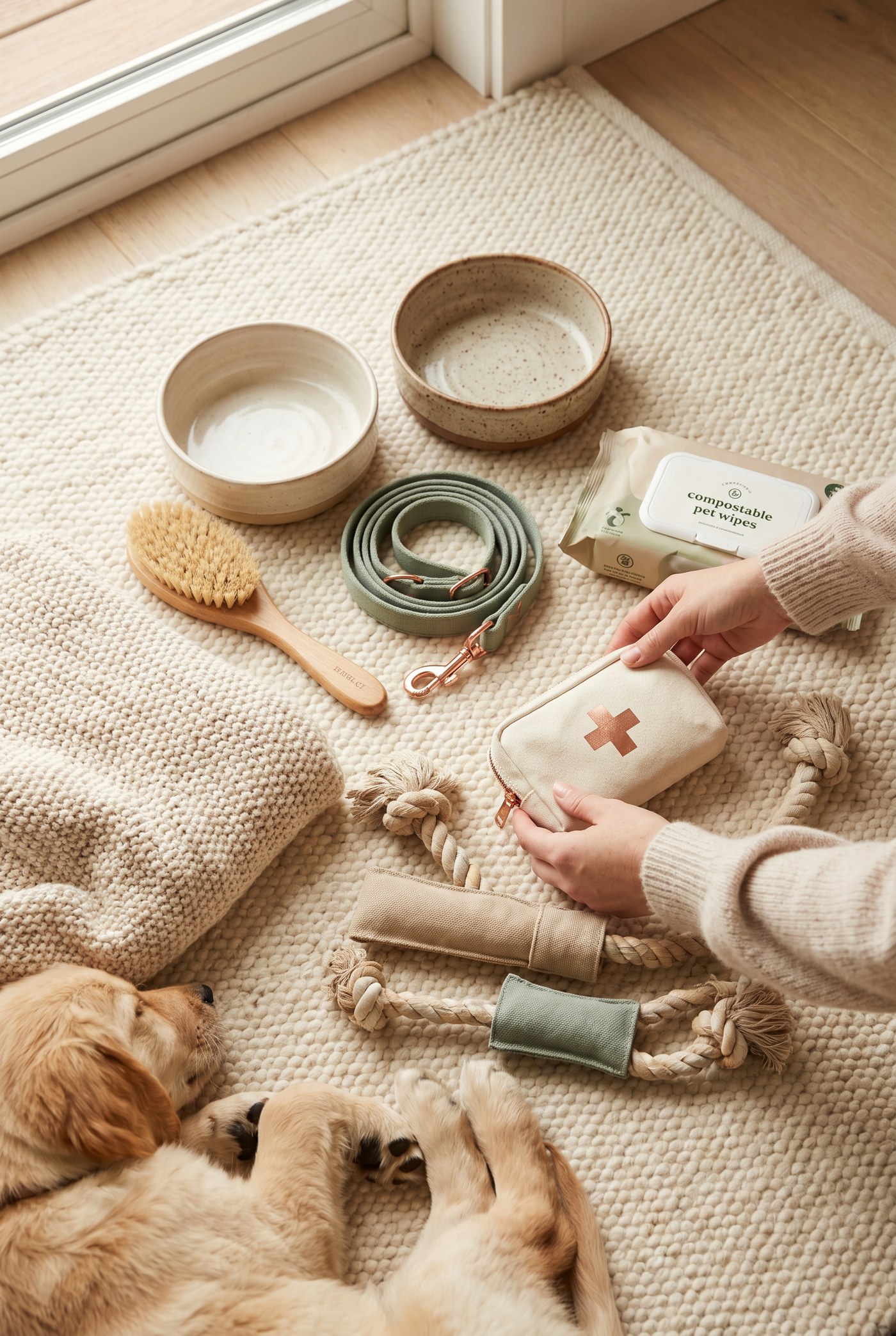
10 Pet Health Essentials Every New Pet Parent Needs
The opening: set expectations
Bringing home a new pet is exciting. It’s also the moment pet stores weaponize your uncertainty.
You’ll be offered $300 in things you don’t need, contradictory advice from five different sources, and zero clarity on what actually matters in the first 30 days. Everyone has opinions. Your neighbor has opinions. The pet store employee definitely has opinions.
Here’s what we’d actually buy for our own pets—nothing more, nothing less.
Week 1: the vet visit is non-negotiable (here’s why)
Your first move isn’t the pet store. It’s a vet appointment within the first week. (If clinic scheduling is tough where you live, an online vet service like Dutch can cover the basics by video while you wait for an in-person slot.)
Even if your puppy came with a “clean bill of health” from a breeder or your kitten from a shelter, you need a baseline. Here’s why: you don’t know what you don’t know. A vet catches parasites, reviews vaccination history, flags spay/neuter timing, and establishes their baseline health record. Bring any paperwork the breeder or shelter gave you—it matters.
This single appointment prevents thousands of dollars in emergency vet bills later. Do not skip it.
The 10 essentials (and why we chose these)
1. Growth-stage food — and stop overthinking this
We researched 8 puppy and kitten formulas. Here’s what we found: they’re all pretty similar if they’re AAFCO-certified for growth.
What matters: Higher protein and fat content (puppies and kittens need it), AAFCO certification for growth, no grain-free nonsense (linked to heart disease in dogs). Your vet can recommend three solid options. They’re all in the same price range. Pick one, move on.
Don’t fall for premium branding. The expensive food and the mid-range food are doing the same job. We’d spend the money elsewhere.
If you are specifically looking beyond basic kibble for natural treats, long-lasting chews, pet supplements, or a raw-feeding starter point, See Raw Paws options is worth a look. We would still run any major diet change past your vet first, especially for puppies, kittens, seniors, or pets with medical issues, but Raw Paws fits the “buy the useful stuff, skip the gimmicks” approach better than another aisle of novelty snacks.
2. Parasite prevention — this one is actually non-negotiable
Heartworm disease kills dogs. It’s preventable with a monthly pill or topical. That’s it—this is the decision.
Your vet will recommend the right product based on your pet’s size and your climate. It costs $15–$40 per month. It’s the single best investment you can make.
Don’t go cheap on this. Don’t skip months. Don’t think “my pet never goes outside.” Get the prescription, set a calendar reminder, do it.
3. A safe space to decompress
New pets are terrified. Everything is unfamiliar. They need a designated space where they can hide and feel secure.
For dogs: A crate with a breathable cover creates a den-like environment. This reduces anxiety, gives them a retreat, and makes house-training infinitely easier. The cover is key—it makes the crate feel like a shelter, not a cage.
For cats: A soft hideaway bed in a quiet corner. High-traffic areas = stressed cats. Find them a corner where they can observe without being observed.
We researched three crate styles and three bed types. The specifics don’t matter—what matters is giving them control. A pet that feels trapped will act out. A pet with a safe space will settle.
4. Mental enrichment from day one (this is how you prevent behavior problems)
Here’s what most new pet parents get wrong: they think exhaustion comes from physical activity.
It doesn’t. A dog that’s mentally stimulated can be tired out in 15 minutes. A dog that’s bored will destroy your house no matter how many walks you take.
Mental enrichment works because sniffing, licking, and problem-solving release endorphins that naturally calm your pet’s nervous system.
What we’d buy:
- Snuffle Mat (dogs): Hide kibble inside instead of using a bowl. It taps into their foraging instinct and keeps them busy for 20 minutes.
- Lick Mat (dogs/cats): Spread peanut butter, yogurt, or wet food on it and freeze. Give it 15 minutes before a known stressor (mail carrier, new people, thunderstorm).
- Puzzle Toy (dogs/cats): Rotate 2–3 different puzzles across the week so novelty stays high. The WOOF Pupsicle is our pick for heavy chewers—it’s mess-free and lasts.
Start enrichment immediately. Don’t wait until your pet develops behavior problems. Prevention is infinitely cheaper than fixing a destructive dog.
5. An enzyme cleaner
Accidents will happen. When they do, use an enzyme cleaner.
Standard cleaners mask the smell. Enzyme cleaners break down the uric acid crystals and bacteria that are causing it. Your pet’s nose is 10,000x more sensitive than yours—they can still smell what you can’t. If you don’t eliminate the odor, they’ll keep using that spot.
What we use: Biokleen Bac-Out Enzyme Cleaner. Plant-based, non-toxic, actually works. Soak the area, wait 10–15 minutes, blot dry.
Do NOT use a steam cleaner first. Heat sets the stain permanently. Enzyme first, steam second (if needed).
6. ID tags and microchipping (before they leave the car)
New pets are escape risks. The car is terrifying, the house is unfamiliar, and they will bolt if given the chance.
Get an ID tag with your phone number and put it on their collar before you drive home. Make sure someone is home for the first few days—don’t leave them alone while they’re adjusting.
Ask your vet to microchip them at that first wellness visit. It costs ~$45 and lasts their entire life. It’s the backup plan if they lose their collar.
Both matter. Do both.
7. A training foundation (the first 16 weeks are critical)
The first 16 weeks of a puppy’s life is a socialization window. What they experience during this period shapes their personality for life. A well-socialized puppy becomes a confident adult dog. A puppy that misses this window can be fearful and reactive forever.
Start positive reinforcement training immediately—even simple “sit” and “name recognition” exercises. You’re not training a robot; you’re building communication and trust.
What we recommend: Brain Training for Dogs. We researched this alongside three other at-home programs. Here’s why we picked it: it’s designed for pet owners (not trainers), it uses force-free methods, it taps into your dog’s problem-solving instinct rather than just treating symptoms. It covers everything from basic manners to advanced enrichment games. Rainy day? Can’t go for a long hike? Run a Brain Training session instead. Your dog will be more tired mentally than physically.
This program is $67 for lifetime access. Compare that to a single obedience class or a behavioral issue that takes months to fix.
8. A grooming routine (start now, not later)
Start handling your pet’s paws, ears, and mouth from day one—even if they don’t need grooming yet.
Why? Because vet visits and nail trims are infinitely less stressful if your pet is already used to being handled. A pet that’s never had their ears touched will panic at a vet exam. A pet that’s been desensitized will cooperate.
This takes 30 seconds a day. The payoff is years of stress-free vet appointments.
9. Pet insurance (do not skip this)
A single emergency vet visit costs $1,500–$5,000. A fractured leg, a blocked urinary tract, an ingested foreign object—these happen. Not “might happen.” Happen.
Pet insurance typically costs $30–$60 per month. Most policies cover accidents, illnesses, and preventive care. The best time to enroll is when your pet is young and healthy, before any pre-existing conditions develop.
We recommend getting a quote from three providers. It takes 5 minutes. The peace of mind is worth it.
10. Patience (the most important one)
The first 30 days are an adjustment period. Your pet is learning a completely new environment, routine, and set of rules. Expect accidents, some anxiety, and a few sleepless nights.
Here’s what works: Consistency, patience, and positive reinforcement. Not anger. Not punishment. Not frustration.
The bond you build in those early weeks lasts a lifetime. Be patient with them—they’re scared.
Quick Pick Summary
If you’re still stuck, here are our top 3 picks:
- For the New Puppy Parent: Brain Training for Dogs. It gives new owners a structured, force-free training plan before bad habits harden.
- For the First Week at Home: Crate with a Breathable Cover. It creates the safe den every new pet needs while they learn the house.
- For Accident Cleanup: Biokleen Bac-Out Enzyme Cleaner. It attacks the odor source instead of masking it, which helps prevent repeat accidents.
Stop Guessing.
Start Choosing.